RVer
Session in progress · Atlantic Coast

Virtual Reality
that transforms lives.

RVer System

We help healthcare institutions deliver more comfort, distraction in moments of pain and better quality of life, with the safety of a medical device registered in EUDAMED and with INFARMED (Portugal).

Trusted by leading healthcare institutions

50k+
Sessions delivered
780+
Patients reached
26+
Partner institutions
50+
Immersive scenarios
5
Years of experience
The clinical challenge

Your patients deserve more than waiting.

In healthcare institutions, there are critical moments where technology can make a difference, and where the absence of alternatives has real costs.

a.

Pain and anxiety in procedures

Invasive procedures, chemotherapy, painful treatments: patients arrive afraid. Medication has limits. Clinical teams need non-pharmacological alternatives backed by evidence.

A non-pharmacological option to use during the procedure
b.

Low rehabilitation adherence

Rehabilitation is long, repetitive and demotivating. Many patients abandon the programme before achieving the goals set by the team, compromising clinical outcomes.

Guided exercise, with every repetition counted and logged
c.

Quality of life in palliative care

Terminal patients have few alternatives for distraction, comfort and meaningful experiences. The team wants to do more, but resources are limited.

Meaningful places, for moments of comfort and connection
Areas of use

One solution.
Multiple applications.

Applications across several areas of healthcare: from pain management to palliative care. We collect the published research on each of them.

i

Pain Management

One of the most researched areas for virtual reality in clinical settings.

ii · Rehabilitation

Rehabilitation.

Support for team-led exercise: guided movement, with repetitions counted automatically and every session logged.

Guided exercise with Virtual Reality
iii

Anxiety & Stress

Calm immersive environments, used as a non-pharmacological complement in anxiety and stress contexts.

iv

Cognitive Stimulation

Interactive scenarios used in cognitive stimulation activities with patients of all ages.

v

Palliative Care

Comfort and distraction through immersive experiences (nature, travel, memories) for patients in end-of-life care.

vi · Mental Health

Calm, controllable environments, managed by the clinical team.

Safe, controllable environments, used as non-pharmacological support under the healthcare team's supervision.

Mental health in hospital settings with Virtual Reality
How it works

Simple for your team.
Transformative for the patient.

No technical complexity. Our team handles everything: it arrives configured, training included.

Passo 01

We set everything up

We deliver the headset with the application installed and the scenario library loaded. Your team needs no technical knowledge.

Passo 02

The team chooses

Intuitive interface to select scenarios according to each patient's moment. Full control in seconds.

Passo 03

The patient experiences

Immersive session with 8K+ video and spatial audio. Session logging and a regularly updated library.

2 clicksFrom menu to video: open the app, pick one
100% offlineLibrary always available
≈ 2 h 40Battery playing video
AutomaticUpdates any time, never mid-session
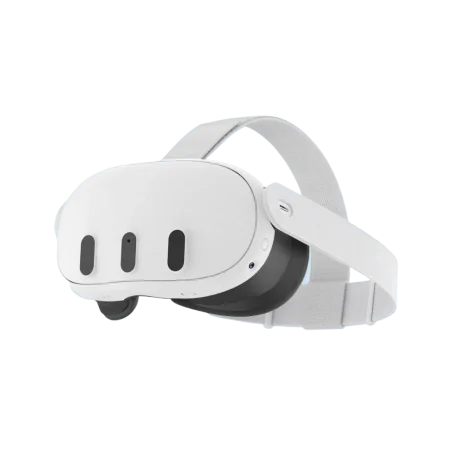
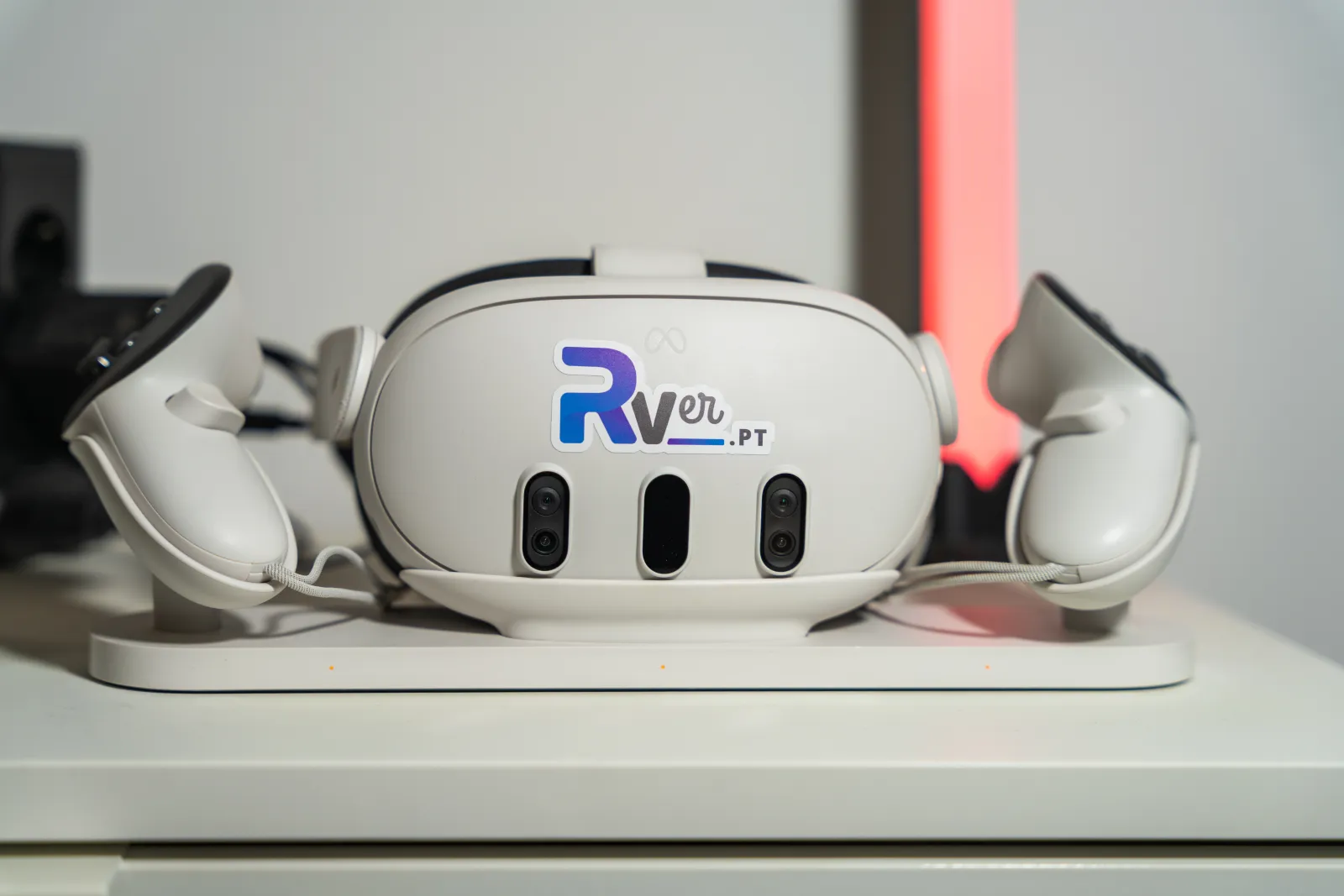
Meta Quest 3 headset with the RVer sticker and its controllers
Ready to use, friction-free
RVer system

The Companion stays.
Everything else happens inside it.

One person runs the fleet from the browser. The family video call and lying-down mode are what that session allows.

01 · The base

The team controls everything
from the browser.

Nothing to install. The clinician opens a page on a PC or tablet on the same Wi-Fi and drives the headsets in real time. Each headset is an entry on screen, and one person is enough to run the whole fleet.

RVer · CompanionLive
Room 1
Amelia R.
Playing
Room 2
Joaquim S.
Paused
Room 3
Rosa M.
Ready
Stop all

All on the local network: no cloud, no install. GDPR-compliant.

02 · During the session

Family can be present
from anywhere.

One of the most requested features by our users. The patient makes a video call with their family while experiencing virtual reality.

The patientUses the headset and sees the family live
em tempo real
The familySees the VR scenarios in real time, from anywhere
The patient sees and hears the family

Through the headset, the family's face and voice are present in real time. The emotional connection is maintained even inside the immersive experience.

The family sees what the patient sees

On their phone or computer, the family follows the same 360° scenarios. They can comment, react and share the moment.

No distance barriers

The family can be at home, in another city or another country. All they need is a phone or computer with a camera.

"My mother cried with joy when she saw the sea for the first time in years, and I was there with her." Family member testimonial
03 · Patient posture

Lying down or reclined
the world stays level.

Many patients cannot sit up. Lying-down mode aligns the horizon with the tilt of the head, so the scenario looks upright instead of skewed. It works with every 360° scenario, with no special content.

Without lying-down modeThe horizon stays tilted: the patient sees the world skewed
enable
With lying-down modeThe horizon aligns with the head: natural image
The horizon follows the head

Beyond recentring the scenario on the patient's direction, RVer aligns the horizon with the tilt of the head. At 30° in a reclined chair or 90° in bed, the image always looks level.

Less discomfort

A misaligned horizon is one of the main causes of discomfort in virtual reality. Aligning it with the patient keeps the session comfortable from start to finish.

Every scenario, at any angle

No need to film lying-down versions. The same 360° scenario serves 0°, 30°, 45° or 90°, without duplicating a single video. It is the catalogue that adapts to the patient's position.

Dentist chair, dialysis, post-op, bed-bound, any reclined position, with no special content. Where it makes the difference
Film · 1 min 57 sSound on
Scientific evidence

Based on science.
Applied in practice.

We collect published research on virtual reality in healthcare settings. Most of it comes from independent teams; our own team also publishes, and those texts are marked as such.

Most are by independent, peer-reviewed authors; the texts marked as RVer Study are written by our team. None of them is a performance claim for the product, nor a substitute for clinical assessment. The Class I medical device registration (EUDAMED and INFARMED) covers the base product.

See the study library (opens in a new window)
Medical Device Class I (base product)
Registered in EUDAMED and with INFARMED (Portugal)
CE marking · MDR 2017/745
MDR 2017/745PT · EU
Regulatory framework

A clinical VR system
registered in EUDAMED and with INFARMED.

Most "VR therapy" solutions on the market are entertainment or wellness apps: without clinical regulation, safety assessment, or legal accountability. RVer is different.

For use in healthcare settings

Usable in NHS and private hospitals, clinics and health centres across Portugal, under team supervision.

Technical documentation and risk assessment

Complies with technical documentation, risk assessment and European standards (MDR 2017/745).

Privacy by design

No personal or clinical patient data leaves the headset. Only per-device usage statistics, identifying no one, to improve the app (GDPR).

Registered in Portugal, CE-marked

Medical device registration in Portugal under MDR 2017/745, with the manufacturer established in the European Union (SRN PT-MF-000059840). The base product bears the CE mark under MDR 2017/745.

Comparison tableRVer vs. other VR solutions

RVer

  • Medical device Class I (base product) · EUDAMED · INFARMED
  • CE marking (MDR 2017/745)
  • Technical documentation and risk assessment
  • Clinical support and specialist training
  • Library curated with healthcare professionals

Unregulated VR apps

  • Not registered as a medical device
  • Classified as entertainment
  • No clinical safety assessment
  • No regulatory accountability
  • Content not developed with healthcare professionals
Science and regulation
Content library

Scenarios created for clinical use.

High-definition 360° video with spatial audio. Library regularly updated with new environments selected with healthcare professionals.

Virtual Reality scenario: Music
Music01
Virtual Reality scenario: Religion
Religion02
Virtual Reality scenario: Environments
Environments03
Virtual Reality scenario: Cities
Cities04
Virtual Reality scenario: Activities
Activities05
Virtual Reality scenario: Events
Events06

All scenarios are selected with the support of healthcare professionals, for patient comfort and wellbeing.

Clinical content-choice assistantRVerAIRuns locally
  • Not a chatbot.
  • Never decides for anyone.
  • An RVer model.
  • Learns from use.

A proprietary model, with legible weights, running on the device itself. The team says which area it is working on and RVer AI ranks that device’s library. The rule for each area is written from published literature, independent studies and RVer’s own, and every suggestion shows its evidence statement and its grade. Including when it is weak.

It learns from how that department uses it: what the team picks, what it lets run to the end, what it cuts short. At most ±15% on the ranking, and never over the safety filters. What one department learns stays in that department. Nothing is pooled across clients, nothing trains anything central. No cloud, no account (GDPR).

Independent and RVer studiesthe written basis of every area rule
Meta-analysis → single armthe evidence grade shows on each suggestion
Removes, does not flagcontraindicated content leaves the list
±15%, at mosthow far use can move the ranking

It does not diagnose, prescribe or assess. It ranks content against a goal the clinician chose, and no number is a cut-off or a norm. How it decides, in detail

Modules

Three modules,
one same system.

They complement the base product and are enabled per device. Each has its own page, with the full detail.

01In development

RVer Motion

Guided movement patients will actually want to do.

A 3D coach demonstrates each exercise and the patient copies along, seated. The app counts the repetitions and records the movement: range, smoothness and per-session performance.

See RVer Motion
02In development

RVer Neuro

Cognitive activities that do not feel like exercises.

Seven cognitive activities in a virtual room, with no worksheets and no stopwatch. The session log is raw counts and times, with no grading and no thresholds.

See RVer Neuro
03In development

RVer Exposure

Graded exposure, at the clinician's pace.

360° environments organised into levels, from the easiest to the hardest. The clinician picks the level and sets the pace: the patient never advances on their own.

See RVer Exposure

RVer Motion, RVer Neuro and RVer Exposure are modules in development, not covered by the Class I medical device registration (EUDAMED and INFARMED), which covers the base product.

Licensing

Start with one headset.
Scale as you need.

Flexible model designed for healthcare institutions of any size: from a single clinic to a university hospital.

Request a proposal for RVer
RVer LicensePer institution
Unlimitedsessions, patients and hours
Equipment
  • 1 headset included
  • Additional headsets available
Software
  • App built for clinical use
  • Full scenario library
  • Management app for the team
  • Private area outside sessions
From us
  • Technical support and updates
  • Team training
Price on requestEach institution has different needs: we'll talk to design the right proposal.How to fund and procure →
Partners

Who represents
us

They represent us, validate alongside us and research with the system.

See the full list
HealthTech PortugalPortugalhealthtechportugal.com ↗
Instituto Gabriel BenícioBrazil

If someone says they represent RVer and they are not on this list, they do not.

Ready to transform the experience of your patients?

Tell us about your case. We respond in less than 48 hours.

Contact

Shall we talk?

Tell us a bit about your institution. Our team responds in less than 48 hours with next steps.

FAQ

Frequently asked questions

Just a power outlet and minimal space for the patient. Our team handles all configuration and staff training at no extra cost.
Yes. RVer operates independently and requires no integration with existing hospital systems. Management is done through our own application.
It is a registration in the European database on medical devices (EUDAMED) and with Portugal's regulatory authority for medicines and health products (INFARMED). It allows use in hospitals, clinics and health services across the country, ensuring the product meets the applicable safety and regulatory requirements. The registration covers the base product: the RVer video library. RVer Motion, RVer Neuro and RVer Exposure are modules in development, not covered by the registration. The base product bears the CE mark under MDR 2017/745.
Regularly. Updates are automatic and at no additional cost for partner institutions.
RVer AI is a clinical content-choice assistant, and it is worth being precise about what that means. The team says which area it is working on, by outcome for the video library, by region and function in RVer Motion, by cognitive domain in RVer Neuro, and RVer AI ranks that device library and explains every suggestion. It is not a chatbot: there is nothing to type and no conversation. It is a proprietary RVer model, with legible weights, that runs on the device itself and learns from how that department uses it: it moves the ranking by at most ±15%, and never over the safety filters. The rule for each area is written from published literature, independent studies and RVer own research, and every suggestion shows its evidence statement and its grade (meta-analysis, RCT, review, pre-post or single arm), including when it is weak. The assigned patient contraindications remove content from the list, and photosensitivity always excludes. It does not diagnose, prescribe or assess: it ranks content against a goal the clinician chose, and no number is a cut-off or a norm. What one department learns stays in that department. Nothing is pooled across clients and nothing trains anything central. No cloud, no account (GDPR).

Yes. Lying-down mode aligns the horizon of the experience with the tilt of the head, so the image appears level even with the patient at 30° or 90°: in bed, in a dentist chair or during dialysis. It applies to every 360° scenario, with no special content needed, and is enabled in the settings.
Through the Companion app, which opens in the browser on any PC or tablet on the same Wi-Fi network: with nothing to install. Each headset appears as an entry: the clinician picks the scenario, plays or pauses, assigns the patient and can trigger a remote emergency stop. One person manages a whole fleet of headsets from a single screen. Everything runs on the local network, with no cloud (GDPR).
No. The licence price is fixed and does not depend on the number of sessions, patients or hours of use. You can use the equipment as often as you like, with as many patients as you like, with no extra cost and no usage metering.
Yes. The licence includes one headset, but you can add additional headsets as needed, with volume-adapted pricing.
Yes, training is included in the licence, delivered remotely, with ongoing support.
RVer is safe for the vast majority of patients. Caution or prior clinical assessment is advised for people who: have a history of severe motion sickness or vestibular disorders; have uncontrolled epilepsy or photosensitive seizure disorders; are unable to follow safety instructions due to severe cognitive impairment. When in doubt, the responsible healthcare professional always makes the final decision on use.