
Since Monday, 14 September, RVer has been in Brazil. Fifteen days of meetings with distributors, institutions and potential partners — and this article exists because the news is easy to tell badly.
So let us tell it with the limits up front.
What is already true
We are a Portuguese company entering the Brazilian market. We are not a Brazilian company — not yet. There is no entity incorporated in Brazil, no office, no local team.
We started in Fortaleza. What there is, is a schedule: two weeks across the country meeting the people who distribute health technology, the people who run long-term care institutions, and the people who have already noticed that the non-pharmacological side of care has very little serious supply.
What is not true yet
Nothing is signed. No contract, no exclusivity, no distribution agreement. That is precisely why this text names nobody on the Brazilian side: we are evaluating partners, and announcing conversations as if they were deals is the fastest way to ruin them.
When something is signed, we will say who it is.
The regulatory part, which is the part that matters
The registration RVer holds is a Class I Medical Device registration with Infarmed, and it covers the base product — the immersive video library. It is a Portuguese registration, with effect in the European space. It is not a worldwide credential and it does not travel in a suitcase.
In Brazil, medical devices are regulated by ANVISA. RVer holds no ANVISA registration. Three practical consequences follow, and they are internal rules, not suggestions:
- We do not invoke the Infarmed registration in Brazil as though it applied there. It applies where it was issued.
- We make no therapeutic claim in Brazil. What is presented to a Brazilian institution is what the product does — meaningful activity, comfort, occupation, a record of what happened in the session — without promising a clinical effect. Regulation follows the claimed intended purpose: it is the claim that pulls a product into the regime, not the type of buyer.
- The ANVISA door opens with a Brazilian partner, when the path requires it. From what we have established, the process presumes a holder with legal presence in the country — one more reason for the order to be this one: partner first, registration after, not the other way round.
For the European framing, see what a Class I Medical Device is.
How a small company reaches a country it is not in
This is the part that makes the trip possible, and it is not commercial — it is operational.
The equipment stays ours. The model is the same as in Portugal: the institution does not buy hardware, it contracts a service and the equipment comes with it — see the headsets stay ours. The difference planned for Brazil is where the equipment comes from: once a contract is signed, the headsets are bought in-country, same model, and configured remotely. No fleet crosses customs, and no import cost is added to the service.
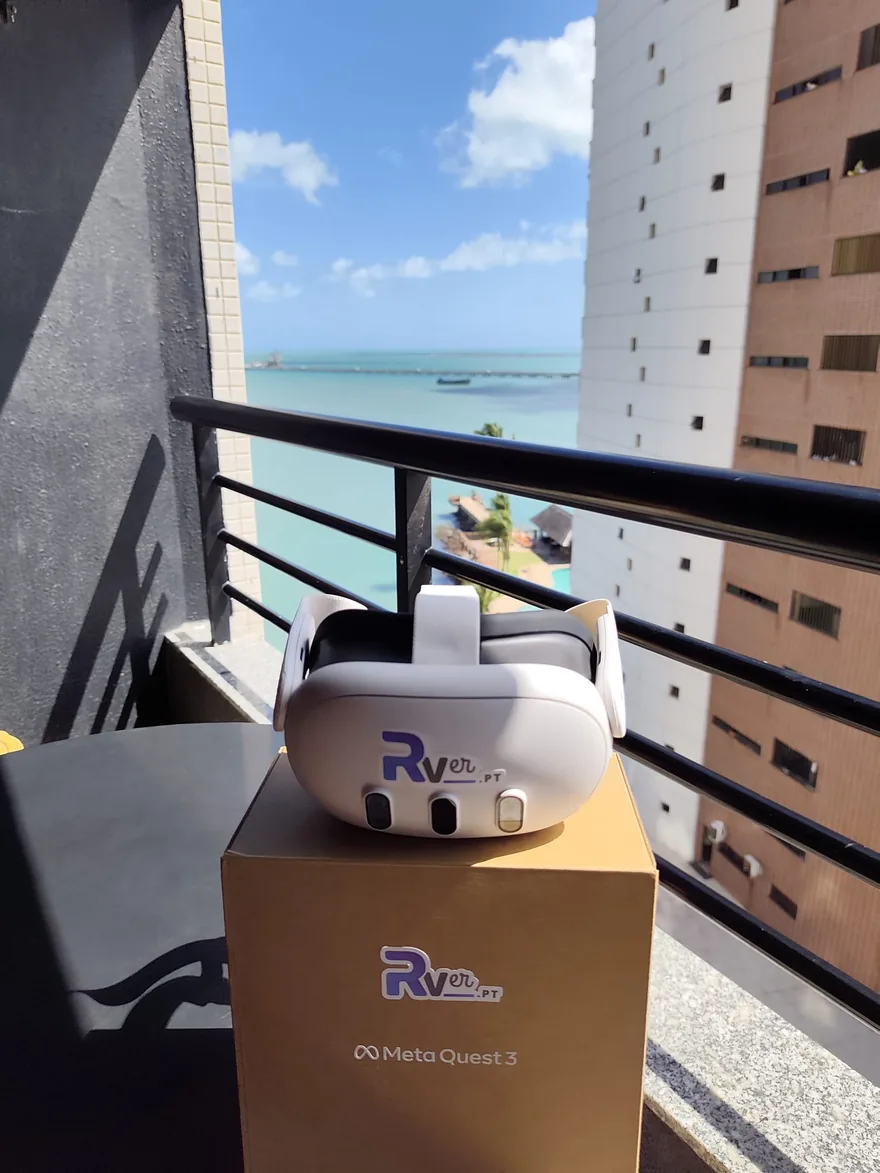
None of that is true yet. The only equipment of ours on Brazilian soil is the one in the photograph above — the demo headset, carried over from Portugal for this trip, because there is no operation there yet to justify anything else.
Remote configuration is not improvisation: it is how the platform was designed from the start. Content sits on the device and the session runs without depending on an internet connection — see content on the device — and management happens through the companion app, see remote control of the session.
The result is that distance stops being a logistics problem and goes back to being what it always was: a people problem. Someone has to be in the room with the resident. That part is not solved remotely, here or there.
Where we will lose, and it is better written down
The library is European. Most scenes were filmed in Portugal and in Europe. For activity, comfort and conversation, that works anywhere. For reminiscence — which depends on the person recognising the place — it does not work the same way for someone who never lived here. Developed in when the person's place isn't in the library.
The platform is in European Portuguese and in English. Usable, readable, but not the same thing as being written in the language of the people using it every day.
And we have no track record in Brazil. Every installation, every resident and every usage record we can show is European. Anyone evaluating RVer there is evaluating a foreign company with no local references, and that is a legitimate argument against us until it stops being one.
What we are looking for in these fifteen days
Distributors with real work behind them in health and long-term care institutions. Clinical partners willing to run a serious pilot, with the criteria defined before it starts — the recipe is in how to run a pilot. And people who will tell us where the European model does not fit, which is the most valuable thing a trip like this can bring home.
We are promising no dates. When there are any, we will write them here.
RVer's role
RVer's base product is an immersive video library, registered as a Class I Medical Device with Infarmed — a Portuguese registration, with no effect outside the European space. RVer Motion and RVer Neuro are modules in development, not covered by that registration. The platform records the session: it does not assess, grade or diagnose, and does not replace clinical assessment or the team's decision.